
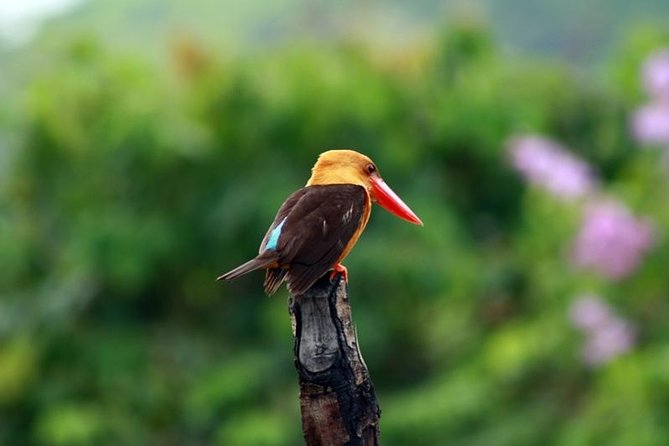
Reviewed · LANGKAWI TOURS
Birdwatching Tour in Langkawi
Hornbills make this more than a simple bird walk. This four-hour Langkawi outing takes you from waterbird habitats to mountain rainforest, with a local guide helping you spot kingfishers, egrets, herons, whistling ducks, and great hornbills. I like the small group of up to eight people and the included hotel transport, binoculars, bottled water, and English-speaking nature guide. I also like that the operator follows bird-tourism guidelines and refuses feeding, baiting, and recorded bird calls. The main drawback is clear: birds may sit far away, so casual sightseers can find the long periods of looking through binoculars slow.
The morning start is at 7:30 am, when bird activity is usually a sensible target, though an afternoon departure is also offered. Guides such as Sham, Afie, Ikram, and Affie have helped participants find birds that were easy to miss without trained eyes, including four kingfishers in one outing and 23 species on another. Still, this is best for people who enjoy patient observation rather than anyone expecting constant close-up photographs.
In This Review
- Key points at a glance
- From a village pond to Langkawi’s highest peak
- What you may see around the ponds and mangroves
- Reaching the rainforest and searching for hornbills
- Why the local guide is the main value
- Morning or afternoon: choosing the better departure
- What to wear and bring for comfort
- Is this suitable for families and first-time birders?
- The ethical side of the outing
- How the tour performs for photography
- Price, group size, and cancellation terms
- Who should book the Langkawi bird tour?
- FAQ
- Where does the birdwatching tour take place?
- How long does the tour last?
- What time does the morning tour start?
- Is an afternoon departure available?
- Is hotel pickup included?
- What equipment is provided?
- What birds might I see?
- Is the tour suitable for children?
- How many people can join the tour?
- What happens if bad weather cancels the tour?
Key points at a glance
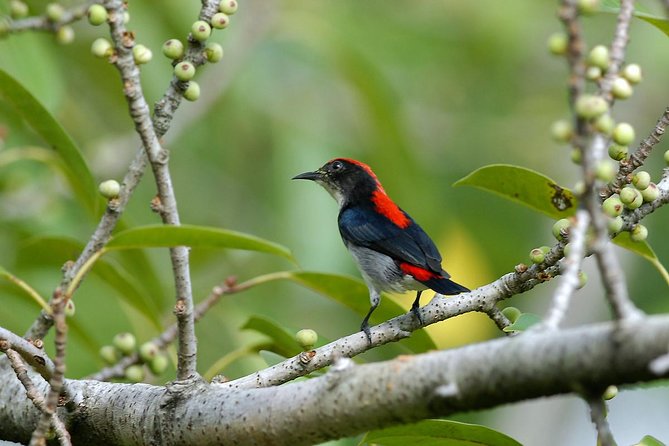
- Waterbirds and rainforest birds in one outing: Look for whistling ducks, egrets, pond herons, kingfishers, hornbills, and raptors in different settings.
- Great hornbills are a realistic highlight: Sightings have included great hornbills, pied hornbills, and mountain hawk-eagles.
- A guide makes a real difference: Guides have pointed out small birds hidden under branches and distant birds that most people would miss.
- Hotel pickup is included: Return transport from hotels in Langkawi makes the early start much easier.
- Ethical birdwatching matters here: No feeding, bait, or bird calls are used to force sightings.
- Bring patience and modest expectations: Birds can be distant, and good photographs are possible but never guaranteed.
From a village pond to Langkawi’s highest peak
The appeal of this tour is the change in habitat. Rather than keeping you in one park or beside one pond, the outing is designed to show you several sides of Langkawi’s birdlife. You may begin around a village pond, where open water and muddy edges attract ducks, egrets, herons, and kingfishers.
From there, the route reaches mountain rainforest, including areas around Langkawi’s highest peak. This gives you a chance to look for larger forest birds such as great hornbills, pied hornbills, and mountain hawk-eagles. The change in elevation and vegetation is useful for birders because different species prefer different conditions.
The exact sequence of stops can depend on bird activity, weather, and the guide’s judgment. The published itinerary identifies JungleWalla, while the tour description also refers to ponds, mangrove areas, and mountain sites. You should think of the trip as a mobile birdwatching session rather than a fixed walk with a precise list of stops.
That flexibility is a strength. If a guide hears or spots something interesting, the group can spend time looking for it instead of rushing through a rigid schedule. The tradeoff is that you may spend several minutes standing quietly and scanning trees before seeing anything.
A few more Malaysia trips worth weighing up
- Langkawi: Kilim Mangrove Boat Tour with Lunch and Pickup
★ 4.8 · 899 reviews - Langkawi : Premium Jet Ski Tour Including Dayang Bunting Island
★ 5.0 · 704 reviews - Langkawi Jet Ski Tour Dayang Bunting Free Drone Video
★ 4.8 · 517 reviews
What you may see around the ponds and mangroves
The wetland portion is likely to feel the most accessible, especially if you are new to birdwatching. Open areas make it easier to notice birds moving, feeding, or standing in shallow water. Whistling ducks, egrets, pond herons, and other waterbirds are among the species you may look for.
Kingfishers are a particular prize. One outing produced four kingfishers, and a common kingfisher was photographed with a fish. These moments show why a guide is useful. The bird may be small, quick, and partly hidden, while the guide already knows where to direct your attention.
Mangrove areas add another layer. Sham has explained how mangroves help protect wildlife and why their preservation matters. You may also see creatures beyond birds, including monkeys and, if conditions are right, a mangrove viper. Wildlife sightings are never promised, but the habitat itself gives the guide more than one kind of nature to point out.
The open wetland can be better for seeing birds, but not always better for photography. Birds may remain on the far side of a pond, and bright tropical light can make distant subjects difficult to capture. I would bring a camera for the chance of a memorable image, not because every sighting will fill the frame.
Reaching the rainforest and searching for hornbills
The mountain section is where the tour takes on more character. Langkawi’s forest birds can be harder to find than pond birds, but they are also the reason many people book this outing. Great hornbills and pied hornbills have been seen, along with mountain hawk-eagles and smaller forest species.
Hornbills are not tiny birds that vanish into a reed bed. Their size and unusual shape make them thrilling to spot, even at a distance. The difficulty is getting a clear view. They may sit high in a tree, partly screened by branches, or appear only briefly before moving on.
A guide can help by reading the trees and listening for movement. One guide, Affie, reportedly directed attention to birds hidden under a particular branch, allowing the group to see species that would otherwise have passed unnoticed. That is the central value of this outing: the guide does not just lead you from one place to another, but teaches you how to look.
The rainforest can also test your patience. You may spend a good part of the time watching through binoculars while waiting for a bird to shift into view. If your main goal is a relaxed nature outing with occasional wildlife, this could feel too slow. If you keep a life list or have specific target birds, the same quiet time will feel worthwhile.
Why the local guide is the main value
At $82 per person, the tour is not the cheapest way to spend four hours outdoors in Langkawi. The price makes more sense when you count the return hotel transport, nature guide, binoculars, bottled water, and access to several bird habitats in one morning or afternoon.
The guide is the key part of that calculation. A person without birding experience may look directly at a tree and see nothing. A guide can notice a shape, call, wing movement, or unusual branch position, then help you locate it through the binoculars or scope.
The guides named in the feedback include Sham, Afie, Ikram, and Affie. Sham has been praised for explaining mangrove conservation as well as finding wildlife. Afie and Affie have helped groups locate hornbills and kingfishers, while Ikram has been appreciated for explaining local plants, birds, and scenery.
The experience is also more personal because the group is capped at eight people. That does not guarantee that every participant will have a perfect view, but it is much more manageable than a large coach outing. A small group gives the guide a better chance to respond to your interests and target species.
Birders can write in advance with a list of birds they hope to see. This is worth doing if you have specific aims, such as a great hornbill, kingfisher, or mountain hawk-eagle. The guide will do their best, but the tour does not use feeding, bait, or bird calls, so a target bird remains a possibility rather than a promise.
A completely different sort of day out from Langkawi:
- 5 Hours Sharing Basis Kilim Mangrove Safari Boat Tour in Langkawi
★ 5.0 · 504 reviews - Langkawi: Mangrove River Cruise Sharing 3 Hours
★ 4.6 · 474 reviews - Langkawi: UNESCO Global Geopark Mangrove Cruise
★ 4.9 · 383 reviews - Langkawi : Kilim Geoforest Mangrove Kayak Tour with Lunch
★ 4.9 · 358 reviews
Morning or afternoon: choosing the better departure
The listed meeting time is 7:30 am, and the tour also offers an afternoon option. The morning is the safer choice if birds are your main reason for booking. It gives you an early start and leaves more of the day free for other Langkawi plans.
The afternoon departure may suit you better if you dislike early mornings or want to combine birdwatching with a slower beach day. It can also work well for families who would rather avoid a dawn-style schedule. The information provided does not specify a separate afternoon start time, so confirm that time when booking.
Weather matters. One group continued in the rain and still found migratory and smaller birds, but the operator states that the activity requires good weather. If heavy rain leads to cancellation, you are offered another date or a full refund.
I would avoid scheduling an important connection immediately after the tour. The advertised duration is about four hours, and weather or wildlife sightings may affect the pace. Hotel pickup and return are included, but you should still allow some breathing room in your day.
What to wear and bring for comfort
This is not a formal hike, but you should be ready for outdoor conditions and moderate physical activity. Long sleeves, long trousers, walking shoes, a hat, and strong sun protection are recommended.
Earth colors such as green, brown, or black are preferred. Bright red, yellow, and white clothing can make you more noticeable in a quiet birdwatching setting. The advice is simple and practical, especially when the group is trying to remain calm near wildlife.
Binoculars are included, and a scope is also mentioned as part of the equipment. The operator advises bringing your own binoculars if you have them. Your own pair can save time, give you a clearer view, and avoid waiting if several people want to inspect the same bird.
Bring a camera if you enjoy wildlife photography, but keep expectations realistic. One participant managed photographs of a common kingfisher with a fish, a mangrove viper, and eagles. Other sightings may be distant or partly blocked, particularly in the forest.
Food and drinks are not included. Bottled water is provided, but you should plan your own meal or snack before or after the four-hour outing. Do not assume that a café stop is part of the schedule.
Is this suitable for families and first-time birders?
The tour is marked as family-friendly, and children with an interest in animals may get a lot from it. Younger eyes can sometimes find birds faster than adults, especially when the guide gives precise directions. The sense of discovery can make a quiet morning feel like a treasure hunt.
Still, family-friendly does not mean constant entertainment. The tour is mainly about standing, listening, scanning, and waiting. A child who enjoys wildlife books, spotting games, or photography is more likely to enjoy it than one who needs frequent movement.
First-time birders can join, but you should accept that the guide may use much of the time looking through binoculars. One less experienced participant found the activity too long and better suited to serious bird enthusiasts. That is a fair warning, not a criticism of the tour.
You do not need to know bird names before you go. The guide can help you identify what you see and explain the plants and habitats around you. But you should be willing to learn the basic rhythm of birdwatching: stop, listen, look, wait, and look again.
The ethical side of the outing
I appreciate the clear approach to wildlife. JungleWalla follows BirdLife International guidelines for best practices in bird tourism and does not use feeding, bait, or bird calls.
That means the tour puts natural behavior ahead of guaranteed sightings. You may not get the perfect close-up, but the birds are not being pulled into an artificial setup for the sake of a photograph.
This matters most with species such as hornbills and kingfishers. Seeing a bird feeding, flying, or resting on its own terms is more meaningful than seeing it arrive because food was placed nearby. It also keeps the experience quieter and less intrusive.
The phrase close encounter should be treated carefully. You may get an excellent view through binoculars or a scope, but many birds will remain at a respectful distance. The outing is about seeing wildlife in its habitat, not handling animals or approaching them closely.
How the tour performs for photography
Photographers should know what they are buying. You may photograph kingfishers, eagles, hornbills, and wetland birds, but the tour is not designed as a dedicated photo hide with guaranteed close subjects.
The best images will depend on luck, light, distance, and your equipment. A bird may appear for seconds, sit high in a tree, or remain across a pond. A phone camera can record the memory, but serious bird photography will be easier with a long lens.
The scenery gives you useful supporting subjects. Ponds, mangroves, forest, and mountain views help create a sense of place even when a bird is too far away for a sharp portrait. If you photograph people in your group, ask first and keep the quiet mood of the outing.
Price, group size, and cancellation terms
The $82 price includes return hotel transfers anywhere in Langkawi, an English-speaking nature guide, binoculars, and bottled water. Food and drinks are not included.
For a private taxi, equipment rental, and an independent search across several habitats, the combined cost could add up quickly. The tour offers a more organized way to reach different birding areas, and the group limit of eight helps protect the quality of the guiding.
A minimum of two people is required per booking. Confirmation is received at booking, and mobile ticketing is offered. You can cancel for a full refund up to 24 hours before the local start time. Changes or cancellations inside 24 hours are not accepted for a refund, unless the operator cancels because of poor weather.
The overall rating is 4.9 from 116 reviews, with 97 percent recommending the experience. Those figures suggest strong satisfaction, but they do not remove the main condition: you need to enjoy slow, careful wildlife watching.
Who should book the Langkawi bird tour?
I would recommend this tour to birders who want help finding local and migratory species without arranging transport and equipment themselves. It is also a good choice if you want more than beaches, cable cars, and sightseeing stops, and you enjoy learning how mangroves and rainforest support wildlife.
Families can enjoy it if children are prepared for patience. The small group, local guides, and chance of seeing hornbills make it more rewarding than a general nature drive.
I would hesitate if your priority is guaranteed close photography or a quick wildlife encounter. Birds can be distant, the forest can be quiet, and four hours is a long time if you do not enjoy binocular work.
For the best chance of satisfaction, choose the morning, tell the operator your target birds in advance, wear muted outdoor clothing, and bring your own binoculars if you have a good pair. If a great hornbill, kingfisher, or mountain hawk-eagle is on your list, this is a sensible way to search for it without disturbing the habitat.
FAQ
Where does the birdwatching tour take place?
The tour takes place in Langkawi, with birdwatching around habitats that can include a village pond, mangrove areas, and mountain rainforest near Langkawi’s highest peak. JungleWalla is identified as a stop.
How long does the tour last?
The tour lasts approximately four hours.
What time does the morning tour start?
The listed morning start time is 7:30 am.
Is an afternoon departure available?
Yes. You can choose a morning or afternoon departure, although the specific afternoon start time should be confirmed when booking.
Is hotel pickup included?
Yes. Return transfers from any hotel in Langkawi are included.
What equipment is provided?
Binoculars, a scope, and bottled water are provided. You are advised to bring your own binoculars if you have them.
What birds might I see?
Possible sightings include whistling ducks, egrets, herons, pond herons, kingfishers, great hornbills, pied hornbills, and mountain hawk-eagles. Sightings are not guaranteed.
Is the tour suitable for children?
The tour is described as family-friendly. Participants should also have a moderate level of physical fitness and be comfortable with patient wildlife observation.
How many people can join the tour?
The maximum group size is eight people, and a minimum of two people is required per booking.
What happens if bad weather cancels the tour?
If the tour is canceled because of poor weather, you will be offered a different date or a full refund. You can also cancel at least 24 hours before the start time for a full refund.
Just added around Langkawi
- Langkawi Highlights Day Tour – ATV, Mangrove Cruise & Cable Car★ 5.0 · 3 reviews
- Customize Langkawi Full Day Tour (8 hrs-Private Tour)★ 3.5 · 3 reviews
- Langkawi ATV Adventure Ride with Ziplines And Waterfall★ 3.5 · 3 reviews
- Langkawi: Sunset Dinner Cruise with Hotel Transfer★ 5.0 · 3 reviews
- Langkawi: Jet Ski and Parasailing Tour★ 3.5 · 3 reviews
- Private Langkawi Departure Transfer to Airport★ 4.0 · 3 reviews
- Langkawi Sunset Cruise★ 3.0 · 3 reviews
- Langkawi Jet Ski Tour Golden Tuba★ 5.0 · 3 reviews
Langkawi Tours, compared.

Premium Jet Ski Tour Including Dayang Bunting Island
Read our review →
5 Hours Sharing Basis Kilim Mangrove Safari Boat Tour in Langkawi
Read our review →

Browse the lists this tour appears in