
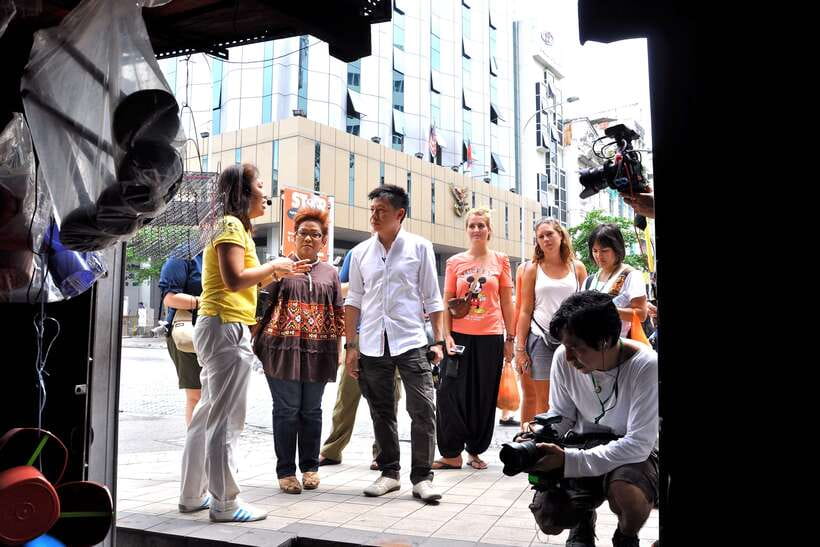
Reviewed · HISTORICAL TOURS
Kuala Lumpur Heritage 4-Hour Walking Tour
Kuala Lumpur tells stories one bite at a time. This four-hour walk brings the city’s Malay, Chinese, and Indian traditions together through local food tastings, Central Market, Chinatown, and two remarkable temples. I like the small group limit of eight, which gives your guide room to answer questions and adjust the food stops to your interests. I also like the way the tour joins sightseeing with real customs, including temple rituals and local ways of eating.
The main drawback is the meeting point. The Tourist Information and Interaction Centre sits above an alley near Kasturi Walk, and the directions can feel like a small treasure hunt, especially if your phone connection is poor. You should also expect a fair amount of walking, and some visitors found the pace a little sporty. Still, guides such as Lewis, Luis, Farah, Kristin, and Christie have earned praise for making the day warm, personal, and full of useful explanations.
In This Review
- Four details that make this Kuala Lumpur walk worthwhile
- A four-hour introduction to Kuala Lumpur’s many cultures
- Finding the turquoise Tourist Information Centre
- Kasturi Walk and the covered market atmosphere
- Chinatown and the first Chinese settlers
- Sin Sze Si Ya Temple and Chinese customs
- Sri Mahamariamman Temple and Hindu traditions
- Food tastings that can replace breakfast
- Guides who shape the feel of the day
- Walking pace, timing, and the route’s limits
- Is $60 a fair price?
- Who should book this walking tour?
- The final stop near Masjid Jamek LRT station
- Should you book it?
- FAQ
- How long does the Kuala Lumpur Heritage Walking Tour last?
- Where does the tour meet?
- Where does the tour finish?
- What food is included?
- What languages are available?
- Is there an age limit?
Four details that make this Kuala Lumpur walk worthwhile
- Three food stops may replace breakfast: Plan to arrive hungry, since the tastings can add up quickly.
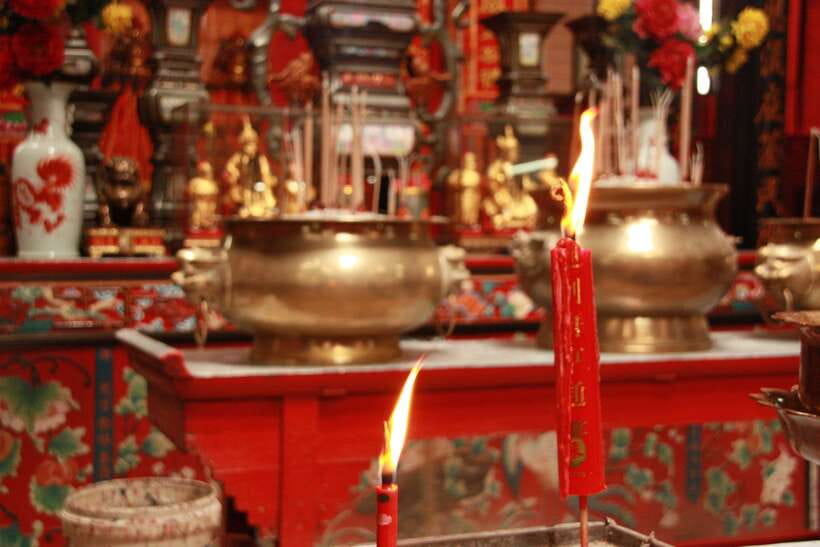
- Two major temples anchor the route: Sin Sze Si Ya Temple and Sri Mahamariamman Temple offer different windows into Chinese and Hindu practice.
- The group is limited to eight people: A small party makes it easier to ask questions and receive help with customs and food.
- Your guide can make rituals less intimidating: You may receive a blessing, make a wish at a Chinese shrine, or learn the purpose of items used in temple traditions.
- Kasturi Walk is both a landmark and a meeting-point challenge: Finding the turquoise center takes a few careful turns.
- The tour ends near Masjid Jamek LRT station: Your guide can help point you toward your hotel afterward.
A four-hour introduction to Kuala Lumpur’s many cultures
Kuala Lumpur is easiest to understand when you move between its neighborhoods on foot. In just a few blocks, Chinese temples, Hindu shrines, Malay food, colonial-era streets, covered markets, and modern city life sit close together. This tour uses that compact city center well.
The route is not simply a parade of buildings. Your guide explains how Chinese and Indian settlers shaped the city and how different Malaysian communities maintain their customs. That context matters. Without it, a temple can become just another photo stop. With it, the objects, offerings, gestures, and food begin to make sense.
The group size is a real advantage. With no more than eight participants, you are not trying to hear a guide across a large crowd. Guides have also been praised for adapting food choices to what you have already tried, which makes the tastings feel more personal than a fixed sampling menu.
The tour is conducted in English and lasts four hours. A moderate amount of walking is involved, so comfortable shoes are a sensible choice. The route is best suited to visitors who want conversation, food, and cultural detail rather than a quick bus ride past major sights.
More Historical Tours in Kuala Lumpur
- Historical Malacca Guided Day Tour (Shared Tour)
★ 5.0 · 2,172 reviews - Kuala Lumpur: Batu Caves & Historic Buildings Tour
★ 4.7 · 539 reviews - Historical Malacca Day Tour from Kuala Lumpur (Private Tour)
★ 5.0 · 515 reviews
Finding the turquoise Tourist Information Centre
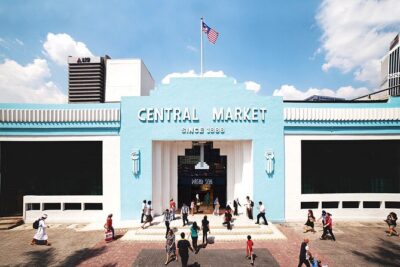
Your meeting point is the Tourist Information and Interaction Centre beside Central Market. The address is not quite as simple as walking to the front doors of Central Market, so allow extra time.
Walk along Kasturi Walk beside Central Market. At the end of the walkway, look for an alley between Central Market and a purple building. Enter the ART LANE, walk about 30 seconds, and find the black staircase. Go upstairs, turn right, and look for a small garden. The center is next door, with a turquoise interior.
That is a lot of directions for a place close to a major landmark. One useful tip is to arrive early and use the color of the center as your final check. A past participant had trouble locating it because internet access was not dependable at the meeting point. I would not cut this one close, especially if you are unfamiliar with Central Market.
Once you meet your guide, the awkward part is over. The tour begins in the historic center and proceeds on foot, with a safety briefing and time for questions before the sightseeing gets underway.
Kasturi Walk and the covered market atmosphere
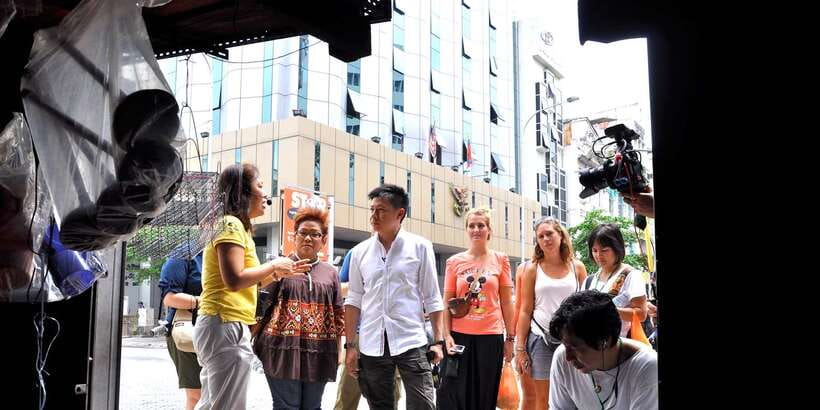
Kasturi Walk gives you an immediate sense of the city’s commercial side. The covered flea market has stalls selling assorted goods, and the walk itself acts as a bridge between Central Market and the older streets beyond.
Your guide can help turn a quick browse into a useful introduction. Instead of simply pointing out merchandise, the tour uses this area to explain how the old center developed and how traders and communities helped shape Kuala Lumpur.
This section is not the grandest part of the morning, but it is practical. It lets you get your bearings before the route becomes more focused on temples, food, and Chinatown. You can also ask your guide about anything catching your eye before moving on.
Chinatown and the first Chinese settlers
The Chinatown portion adds human history to the walk. You hear about the first Chinese settlers and their role in the growth of Kuala Lumpur. The point is not to reduce the area to souvenirs and red signs. It is to show how settlement, trade, faith, and food remain connected in the city center.
The route gives you time to walk rather than simply stop for a lecture. That makes a difference in Chinatown, where small details often compete with the larger sights. Your guide can explain what you are seeing as the group moves through the district.
This is also where the tour’s mix of food and culture begins to make sense. Malaysian food traditions did not develop in isolation. Chinese, Indian, Malay, and other influences meet in everyday dishes, cooking methods, and eating habits. The tastings give you a direct way to understand that blend.
More Walking Tours in Kuala Lumpur
- Kuala Lumpur Local Street Food Private Walking Tour by Night
★ 4.5 · 224 reviews - Kuala Lumpur: Nightlife Walking Tour with Local Guide
★ 5.0 · 33 reviews - Half Day Cultural And Heritage Walking Tour in Kuala Lumpur
★ 5.0 · 28 reviews - Kuala Lumpur InfoFun Walking Tour Experience
★ 5.0 · 24 reviews
Sin Sze Si Ya Temple and Chinese customs
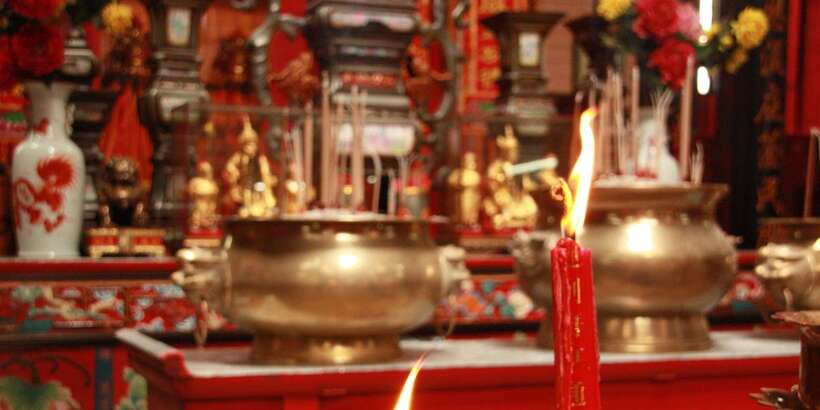
Sin Sze Si Ya Temple is one of the tour’s key cultural stops. Here, the guide explains Chinese religious customs and helps you approach the space with respect. The value is not only in seeing the temple’s architecture. It is in understanding what people do there and why.
Some participants have been guided through Chinese shrine rituals, including making a wish. Your guide may explain how to behave, what to notice, and how to take part without feeling awkward. That kind of help is especially useful if you have never visited a Chinese temple before.
The experience can include small practical purchases connected with the ritual. One participant described receiving help selecting materials intended to clear away bad fortune and buying a coconut associated with creating a clear path. These details are not promised as a fixed part of every departure, so treat them as possible additions rather than guaranteed inclusions.
The temple stop rewards curiosity. Ask questions, watch carefully, and let your guide explain the difference between looking at a ritual and taking part in one respectfully.
Sri Mahamariamman Temple and Hindu traditions
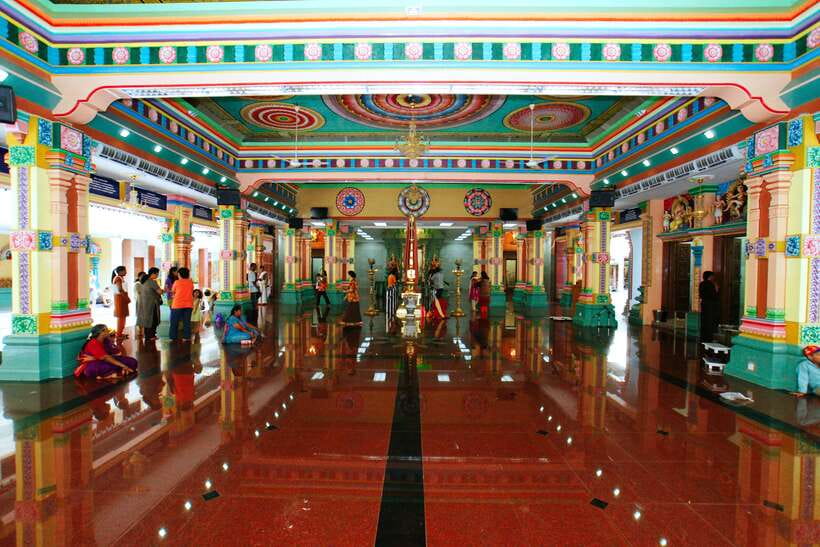
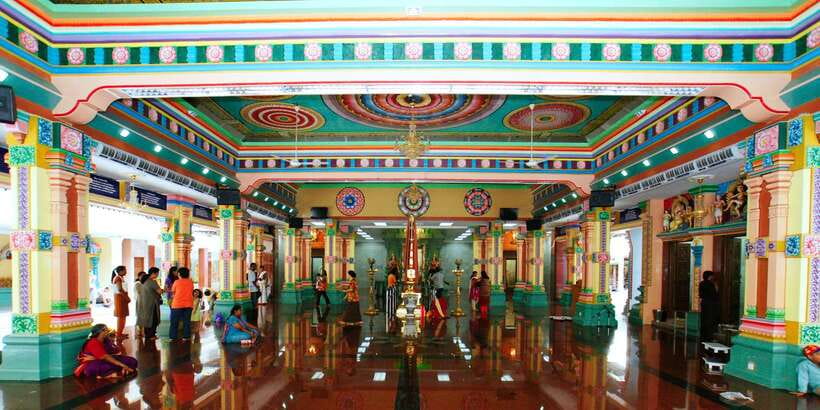
Sri Mahamariamman Temple brings a different religious tradition into the same walking route. It is a striking contrast to Sin Sze Si Ya Temple, and the guide explains Hindu customs and the proper way to approach the visit.
Past participants particularly valued the practical help here. Farah, one of the praised guides, arranged jasmine bracelets before entering the Hindu temple and explained the customs along the way. Another participant was guided through a blessing, which made the visit feel more meaningful than a quick look inside.
You should still remember that temple visits involve active places of worship, not staged attractions. Listen closely to your guide, follow the instructions, and avoid treating ceremonies as entertainment. The small group format helps because questions can be answered quietly and respectfully.
For many people, this will be the strongest sightseeing part of the tour. You see two different faith traditions close together, then receive enough explanation to understand the difference. The buildings matter, but the behavior and beliefs connected with them matter just as much.
Food tastings that can replace breakfast
Food is not a side note here. It is one of the main reasons to book the walk. The tastings introduce Malay food and other local influences, with stops spread through the route. One participant was advised not to eat breakfast because food appeared three times during the morning.
That is useful planning advice. The exact dishes are not specified, and the guide may adjust the selection according to your interests and what you have already tried. Christie was praised for doing just that, creating a better experience for people who wanted to sample local specialties without repeating familiar foods.
The banana-leaf meal is one memorable possibility. Farah patiently showed participants how to eat it, which can spare you the usual uncertainty about where to begin. You may also be invited to try foods you would otherwise pass by. That gentle push is valuable, but you should tell the guide about allergies, dietary restrictions, or foods you cannot eat before accepting samples.
The food tastings also provide natural pauses in the walking. After a temple visit or a busy street, sitting down to eat gives you time to ask questions and compare what you have tried. The result is more than a list of snacks. You begin to see how cultural identity appears in ordinary meals.
Guides who shape the feel of the day
The guide can make or break a walking tour, and this experience has received especially warm feedback for its leaders. Lewis was praised for making a two-person tour feel like an outing with a friend, while also explaining a large amount without becoming dull.
Luis was described as both friendly and effective with a small group, helping participants leave with full bellies and full heads. Kristin received praise for combining food, prayer, walking, and cultural explanation, while Christie was noted for matching tastings to personal interests. Farah added thoughtful extras and took time to explain the banana-leaf meal and temple customs.
These names also reveal an important point: the exact tone may depend on who leads your departure. The common strength is not a scripted performance. It is the guide’s ability to explain, encourage, and help you try unfamiliar things.
Some guides may take photographs during the walk, but this is not presented as a standard guaranteed feature. One participant appreciated having photos shared afterward through email and WhatsApp after giving permission. If this matters to you, ask before the tour begins.
Walking pace, timing, and the route’s limits
Four hours sounds generous, but Kuala Lumpur’s center offers enough material to fill it. You will walk, stop for photos, hear explanations, eat several times, and visit religious sites. One departure lasted almost an hour longer than expected, so keep your schedule flexible after the official finish.
The walking is moderate, but the route may feel active because of repeated stops, stairs, and city streets. Kristin’s tour was described as somewhat sporty. That does not mean an extreme hike, but you should not book this as a low-effort sightseeing option.
The route also has a clear limitation. One participant felt it could have included more places of interest, although the food was good and the guide was pleasant. That criticism is fair. The tour focuses on a compact cultural area, so it will not cover every major Kuala Lumpur landmark.
This is a focused neighborhood walk, not a full city tour. You will not use it to see every part of Kuala Lumpur. You will use it to understand one important section of the city at street level.
Is $60 a fair price?
At $60 per person, the cost is not the cheapest way to wander around Central Market and Chinatown. You are paying for more than access to public streets, though. The price includes an English-speaking guide, bottled water, food tastings, and Malaysian goods and services tax.
The strongest value comes from the interpretation and the food. A self-guided walk can show you the same streets, but it cannot easily explain Chinese and Hindu rituals, teach you how to approach a shrine, or adjust the tasting stops to your interests.
The small group also improves the value. With a maximum of eight participants, you receive more direct attention than you would on a large city tour. That matters when you are asking about unfamiliar food or deciding how to behave inside a temple.
I would consider the price reasonable if you want cultural context and several tastings in one morning. It is less compelling if you prefer to explore independently, already know the Central Market and Chinatown area, or mainly want a long list of famous landmarks.
You can reserve now and pay later, and cancellation is free up to 24 hours before departure for a full refund. Those terms help if your Kuala Lumpur plans are still shifting.
Who should book this walking tour?
I would recommend it most strongly to first-time visitors who want an easy introduction to Kuala Lumpur’s multicultural center. It also suits people who plan their holidays around food and want a guide to help them try unfamiliar dishes.
The tour works well for curious adults and older children, but the minimum age is 11. Families should think about the walking pace and the four-hour length before booking. People interested in religion and local customs will get more from it than those who only want architectural photographs.
It is also a good choice if you enjoy small groups. You can ask direct questions, tell the guide what you have already eaten, and receive more help during temple visits.
I would choose another format if you need step-free sightseeing, dislike tasting unfamiliar food, or want transportation between widely separated landmarks. The supplied information only describes a walking route, and a moderate amount of walking is part of the experience.
The final stop near Masjid Jamek LRT station
The route finishes near Masjid Jamek LRT station, where your guide can point you toward your hotel. This is a useful ending because you are left in a central area with a clear transport reference rather than simply being released on an unnamed street.
The day may finish at the official four-hour mark, though you should allow extra time. A longer departure can be a pleasant surprise, but it may affect lunch reservations, airport plans, or another scheduled activity.
Take a moment at the end to ask your guide for directions. The guide’s local knowledge is one of the tour’s practical benefits, especially if you are still learning Kuala Lumpur’s central streets.
Should you book it?
Book this tour if you want Kuala Lumpur explained through food, faith, and neighborhood life, not just photographed from a vehicle. The combination of Central Market, Chinatown, Sin Sze Si Ya Temple, Sri Mahamariamman Temple, and several tastings gives you a strong first look at the city’s cultural mix.
Go in hungry, wear comfortable shoes, arrive early for the turquoise meeting center, and keep your afternoon open. Skip it if you want a relaxed ride or a longer list of major sights. For a small-group introduction with personal guidance and plenty to eat, the $60 price is a fair exchange.
FAQ
How long does the Kuala Lumpur Heritage Walking Tour last?
The tour is scheduled for four hours. Some departures may run longer, so keeping your plans after the tour flexible is sensible.
Where does the tour meet?
The meeting point is the Tourist Information and Interaction Centre near Central Market. Walk along Kasturi Walk, enter the ART LANE through the alley between Central Market and the purple building, go up the black staircase, and turn right. The center has a turquoise interior.
Where does the tour finish?
The stated end point is Masjid Jamek LRT station. Your guide can point you toward your hotel from there.
What food is included?
Food tastings and bottled water are included. The exact dishes are not specified, and the guide may adjust the tastings according to your interests and what you have already tried.
What languages are available?
The live guide leads the tour in English.
Is there an age limit?
Yes. The minimum permitted age is 11 years old. A moderate amount of walking is involved.
More Walking Tours
- Kuala Lumpur Heritage Walk
★ 4.5 · 23 reviews - Kuala Lumpur: Private custom walking tour with a local guide
★ 4.5 · 18 reviews - Taman Negara Day Tour with Canopy Walk
★ 5.0 · 9 reviews - Kuala Lumpur Walk, Eat & See Tour
★ 5.0 · 8 reviews
More History on the Ground
- From Kuala Lumpur: Private Batu Caves Cultural Tour
★ 4.4 · 410 reviews - Private Half-day Batu Caves and Cultural Tour Kuala Lumpur *2026*
★ 5.0 · 165 reviews - Malacca Historical Private Tour With Personal Chauffeur
★ 4.5 · 151 reviews - Private Half-Day Temples and Cultural Tour in Kuala Lumpur
★ 4.5 · 125 reviews
Just added around Kuala Lumpur
- Historical Melaka Day Tour★ 4.5 · 3 reviews
- AVANI Sepang Goldcoast Resort Hotel To Kuala Lumpur International Airport KLIA KLIA2 Transfer★ 4.5 · 3 reviews
- Best Local Food Tour by Night at Kuala Lumpur★ 3.5 · 3 reviews
- Sunway lagoon Theme Park★ 4.0 · 3 reviews
- Kuala Lumpur Tour Cruise Excursion from Port Klang★ 5.0 · 3 reviews
- Putrajaya: Wetland Studios Admission Ticket★ 3.9 · 3 reviews
- Kuala Lumpur Best Food Tour With A Guide★ 4.5 · 3 reviews
- *10 Hrs Kuala Lumpur Car Tour w’ Tour Guide★ 5.0 · 3 reviews
Historical Tours, compared.
Historical Malacca Guided Day Tour (Shared Tour)
Read our review →
Historical Malacca Day Tour from Kuala Lumpur (Private Tour)
Read our review →
Private Half-day Batu Caves and Cultural Tour Kuala Lumpur *2026*
Read our review →
Malacca Historical Private Tour With Personal Chauffeur
Read our review →Browse the lists this tour appears in