
Reviewed · CULTURAL VILLAGES
Half-Day Mari Mari Cultural Village from Kota Kinabalu
Step into Borneo’s living traditions. This half-day trip from Kota Kinabalu takes you into the countryside for a guided visit to Mari Mari Cultural Village, where you can see traditional homes, sample local food, and learn about five ethnic groups. I like the clear focus on hands-on demonstrations, especially blowpipe making, fire starting, tattooing, and bamboo cooking. I also like that hotel transport and a cultural dance performance are included.
The small maximum group of 15 should make the tour easier to follow than a large coach outing, and the route packs a lot into roughly four hours. My main caution is the limited time. Each cultural stop is planned for about 20 minutes, so you get a lively introduction rather than a slow, detailed study of every tradition.
In This Review
- Key things to know before you book
- Leaving Kota Kinabalu for Mari Mari Cultural Village
- Entering a museum built around real cultural practices
- Dusun traditions and the work of growing rice
- The Rungus longhouse and its raised design
- Lundayeh food preservation and rural life
- Bajau history from sea travel to settled life
- Murut traditions, blowpipes, and fire starting
- Bamboo cooking, tastings, and the meal
- The Borneo cultural dance performance
- What the $90 price really covers
- Who will enjoy this four-hour visit most
- Small practical details that can affect your day
- Should you book Mari Mari Cultural Village?
- FAQ
- How long does the Mari Mari Cultural Village tour take?
- Is hotel pickup and drop-off included?
- What cultures are presented at Mari Mari Cultural Village?
- What food is included?
- What transport is used?
- Is the tour suitable for cruise passengers?
Key things to know before you book
- Five Sabah cultures in one visit: Learn about the Dusun, Rungus, Lundayeh, Bajau, and Murut peoples through homes, customs, food, and demonstrations.
- The countryside setting matters: Mari Mari Cultural Village is away from Kota Kinabalu, giving the visit a stronger sense of place than a city museum.
- Food is part of the lesson: You can smell bamboo cooking, taste Sabahan specialties, and receive either buffet lunch or hi tea depending on the session.
- Practical transport is included: Hotel pickup and drop-off from Kota Kinabalu hotels make this useful if you do not have a car.
- A compact group size helps: The tour accepts a maximum of 15 people, with transport by Innova for smaller parties and an air-conditioned minivan for groups of six or more.
- Plan around your schedule: The regular sessions are listed at 9:00 a.m. and 1:00 p.m., while cruise passengers have special 10:00 a.m. and 2:00 p.m. start times.
Leaving Kota Kinabalu for Mari Mari Cultural Village
The trip begins with pickup from your Kota Kinabalu hotel. That simple detail has real value here because Mari Mari Cultural Village is located in the countryside, away from the city. You do not need to arrange a taxi, find a rental car, or work out the road on your own.
Transport depends on group size. Parties of five or fewer use an Innova, while groups of six or more ride in an air-conditioned minivan. The maximum group size is 15, which is a sensible middle ground: large enough to keep the price workable, but not so large that every demonstration becomes hard to hear.
The tour lasts about four hours, including transport and the village visit. That makes it an easy fit for a short stay in Kota Kinabalu. I would allow extra space around the four-hour estimate if you have an evening flight, a separate appointment, or a strict cruise departure time.
The experience is also useful for cruise passengers, but timing needs care. Cruise passengers are told to use the 10:00 a.m. morning session or the 2:00 p.m. afternoon session. If your ship has a narrow port window, confirm the timing before booking and tell the driver about your schedule. One past booking had to end early because of limited port time, but the driver explained the situation and the village staff adjusted the visit. That shows some practical flexibility, but you should not rely on cutting the tour short.
More Cultural Villages in Kota Kinabalu
- Kota Kinabalu: Mari Mari Cultural Village Tour with Lunch
★ 5.0 · 152 reviews - Mari-Mari Cultural Village Tour Including Lunch
★ 4.5 · 45 reviews - Kota Kinabalu: Mari Mari Village & Bongawan Cruise Package
★ 5.0 · 32 reviews
Entering a museum built around real cultural practices
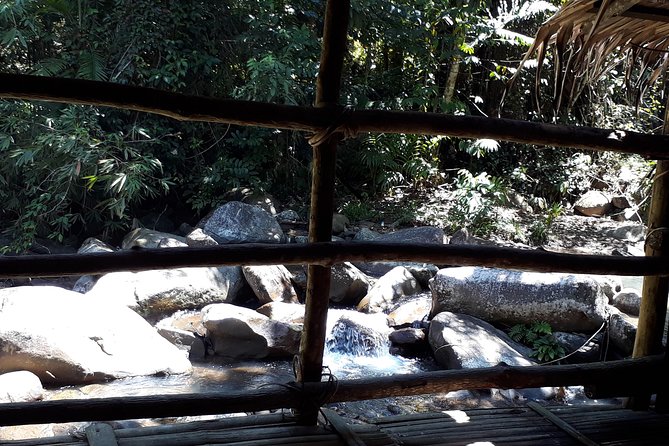
Mari Mari Cultural Village is an open-air museum designed to preserve and explain Borneo’s ethnic cultures. Instead of moving through glass cases, you walk between traditional-style homes and activity areas connected with the Dusun, Rungus, Lundayeh, Bajau, and Murut communities.
The format is easy to understand. Your guide leads you from one section to the next, explains the customs, and points out how different groups adapted to farming, fishing, hunting, housing, and food preservation. The village is not presented as a random collection of huts. Each stop has a cultural focus.
That format works well if this is your first introduction to Sabah. You can connect a building with a way of life, then connect that way of life with the food, tools, and demonstrations you see. The tradeoff is that a staged cultural village can only offer an introduction. It is not the same as visiting a remote community during an ordinary day.
The first stop is the main Mari Mari Cultural Village area, with admission included. After that, the tour moves through sections devoted to individual cultural groups. The published schedule allows about 20 minutes at each section, so listen closely and ask questions while your guide is there. You will not have unlimited time to return to an earlier house.
Dusun traditions and the work of growing rice
The Dusun section introduces a people traditionally associated with paddy cultivation. The explanation distinguishes between dry paddy grown in hill and inland areas and wet paddy cultivated on coastal plains and in valleys.
That difference is worth noticing. Rice farming is not one single practice across Sabah. The local setting affects what can be grown and how it is grown. This is one of the tour’s useful strengths: it links culture to practical work rather than treating tradition as costume alone.
The Dusun stop may appeal most to visitors who want a basic understanding of how food production shaped village life. It also provides context for other demonstrations later in the visit. When you see cooking, tools, or household routines, you have already heard something about the agricultural base behind them.
The 20-minute format keeps the explanation moving, but it can feel brief if farming is your main interest. You will get the broad idea, not a full lesson in planting cycles, tools, or village economics.
The Rungus longhouse and its raised design
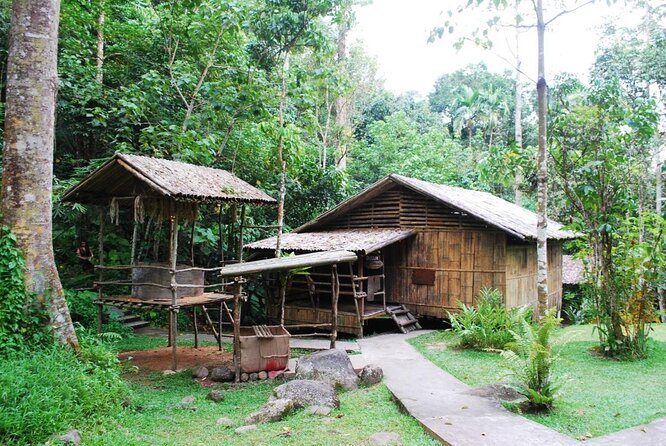
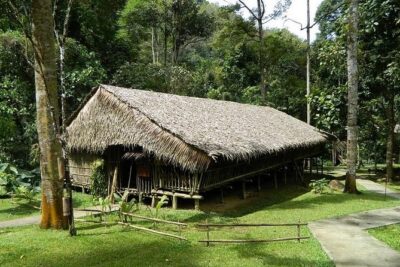
The Rungus section centers on a traditional longhouse. A Rungus longhouse can contain seven to 15 family apartments, creating a shared structure for several households.
The building materials are wood, bamboo, and atap, a roofing material made from palm leaves. The house is raised above the ground, a design that helps protect residents from flooding and wildlife such as snakes. This is one of the clearest places where the building itself explains the community’s needs.
I find this kind of stop more useful than a simple architectural photo opportunity. Look at the relationship between the separate family apartments and the shared longhouse form. The design suggests a balance between individual household space and a larger community arrangement.
Again, expect an introduction rather than a detailed architectural tour. Twenty minutes is enough to understand the basic plan and hear why the house is raised, but not enough for a long conversation about construction techniques or modern changes.
More cultural village visits:
- Private Tour Kampung Gipsi Sabah Cultural Village Kota Kinabalu
★ 5.0 · 32 reviews - Sabah: Mari-Mari Cultural Village Visit + Lunch + transfer
★ 4.5 · 16 reviews - Mari Mari Cultural Village
★ 4.5 · 11 reviews - Mari Mari Cultural Village Tour from Kota Kinabalu
★ 5.0 · 6 reviews
Lundayeh food preservation and rural life
The Lundayeh section presents a traditionally agricultural people who also reared poultry, pigs, and buffaloes. Hunting and fishing were important parts of life as well.
One especially practical detail concerns food storage. Meat and fish were brined or pickled with salt and stored in a traditional storage area. This gives you a glimpse of how preservation helped households manage food before modern refrigeration.
The stop is valuable because it shows culture as a set of solutions to everyday problems. Housing matters, but so do keeping meat safe, caring for animals, and balancing farming with hunting and fishing. These details make the visit feel grounded.
If you are sensitive to displays involving traditional food practices, keep in mind that the tour may discuss preserved meat and fish. The available information does not promise a full cooking lesson at every stop, so expect explanation and demonstration rather than a long workshop.
Bajau history from sea travel to settled life
The Bajau section explains the group’s long connection with the sea. Bajau people are commonly known in the West as Sea Gypsies, though the tour also makes clear that there are distinct East Coast and West Coast Bajau groups.
The West Coast Bajau have settled and adapted to agricultural life, while the wider story begins with seafaring. This contrast helps you avoid a common mistake: treating the Bajau as one uniform community with one single way of life.
For me, this is an important stop because it broadens the picture of Sabah. The region is not only an inland farming culture. Coastal movement, fishing, settlement, and agriculture all belong to the story.
The short stop gives you the main outline, but the term Sea Gypsies can oversimplify a complex identity if it is left unexplained. Pay attention to the distinction between the two regional groups and to the change from sea-based life to settled communities.
Murut traditions, blowpipes, and fire starting
The Murut section is likely to be one of the most memorable parts of the visit. The Murut were the last of Sabah’s major ethnic groups to give up headhunting, and they traditionally practiced shifting cultivation, growing hill paddy and tapioca.
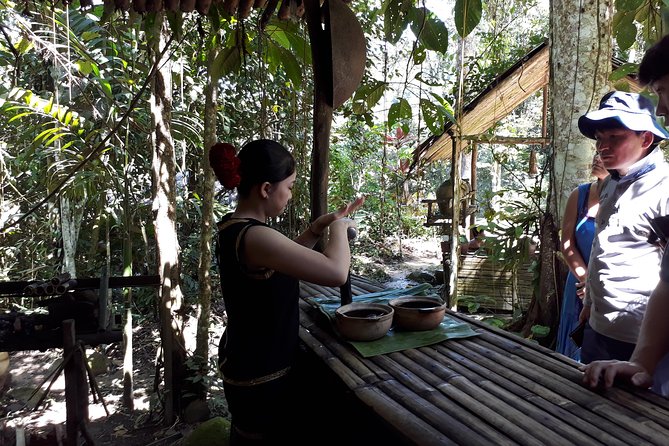
Their diet was supplemented by blowpipe hunting and fishing. The tour connects this background with demonstrations such as blowpipe making and fire starting. You do not just hear that these skills existed. You can see how practical knowledge was tied to food, travel, and survival.
Tattooing is also included among the cultural demonstrations. The guide explains the symbolism behind practices such as tattoos, fire making, and blowpipes, giving you more than a quick performance.
The subject of headhunting requires care and context. It is presented as part of the historical record, not as a cheap shock display. Still, visitors expecting only food and dancing may find this section more serious than the rest.
Bamboo cooking, tastings, and the meal
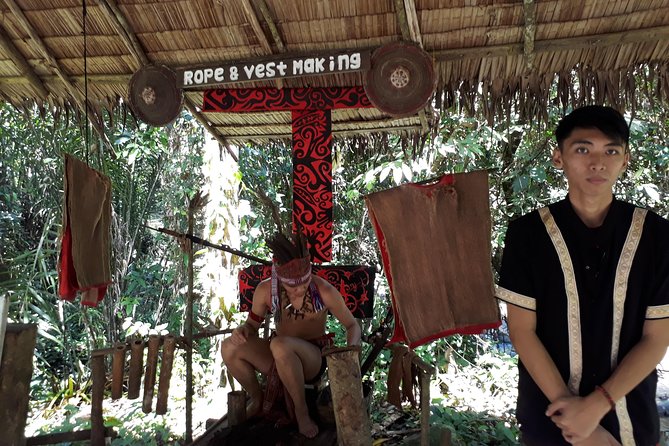
Food is woven through the visit. You can smell bamboo cooking before the meal, which is a clever way to build interest without turning lunch into a separate event. The tour also includes food and drink samples along the route, according to the experience details.
For the 9:00 a.m. session, a buffet lunch is included. The 1:00 p.m. session includes hi tea instead. This difference matters when you compare the price with your plans for the day. A morning booking may function as both a cultural outing and a meal, while the afternoon option is better treated as a tea break rather than lunch.
The exact dishes are not specified, so do not book expecting a particular menu. You can expect Sabahan specialties as part of the experience, but personal expenses are not included. If you have strict dietary needs, ask about them before booking rather than assuming the buffet or hi tea will meet them.
I like the food element because it turns the tour toward the senses. The smell of bamboo cooking and the chance to taste local specialties help the cultural information stick. You may remember a cooking method more clearly than a list of dates.
The Borneo cultural dance performance
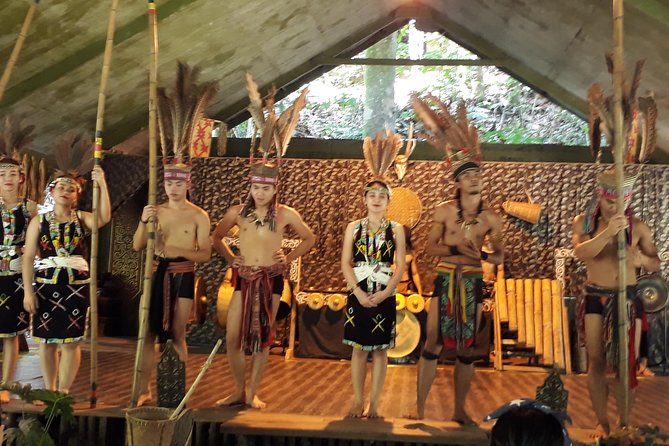
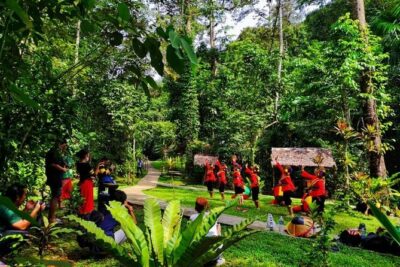
A live Borneo cultural dance performance is included. This gives the visit a lively ending and adds music and movement to the demonstrations and house visits.
The performance is also one reason to avoid rushing through the village. The dance is part of the planned experience, not an optional extra to squeeze in if time remains. It provides a shared finale after the more detailed explanations of farming, homes, food storage, and traditional tools.
As with any cultural performance arranged for visitors, it is best viewed as a presentation created to explain and preserve traditions. That does not make it worthless or false. It simply means you should enjoy it as an organized cultural program, while remembering that ordinary community life is broader than any short stage performance.
What the $90 price really covers
At about $90 per person, this is not the cheapest half-day outing from Kota Kinabalu. The value depends on what you would otherwise have to arrange.
The price includes hotel pickup and drop-off, a driver or guide, transport, admission to Mari Mari Cultural Village, the cultural performance, and food according to your session. For a small group, the Innova transport can make the trip feel more personal. For a larger group, the air-conditioned minivan keeps the road portion comfortable.
You are also paying for a structured introduction to five cultures in one place. Seeing all of them independently would require more planning and more time. If your interest is limited to a single ethnic group or you prefer unplanned village visits, the price may feel high.
I see the strongest value for first-time visitors to Sabah, people without a car, and anyone with only a few days in Kota Kinabalu. The organized transport removes hassle, and the guide gives you a framework for understanding what you see.
The tour averages booking about 18 days in advance, so I would not leave it until the last day if your schedule is fixed. That is especially true for cruise passengers and families who need a particular session.
Who will enjoy this four-hour visit most
I would recommend this experience to you if you want:
- A clear first look at Sabah’s ethnic cultures
- An organized outing without arranging transport
- Hands-on demonstrations instead of only reading displays
- A small-group setting with no more than 15 people
- Food, dance, and cultural explanations in one compact trip
- A half-day activity that fits around other Kota Kinabalu plans
Families may appreciate the variety because the visit changes focus every 20 minutes. One section covers farming, another architecture, another food preservation, and another traditional tools. Most people can participate, according to the tour information.
You may want a different experience if you prefer quiet, unstructured exploration or a long academic discussion of one community. The pace is brisk, and the village is designed to introduce several cultures rather than examine one in great depth.
The tour is also a good choice for a first day in Sabah. It gives you basic cultural context before you visit other parts of the state. If you later travel to Sarawak, a similar cultural village in Kuching could provide a useful comparison, as the operator itself suggests.
Small practical details that can affect your day
Confirmation is provided at booking. Hotel pickup and drop-off are included from Kota Kinabalu hotels, but you should provide accurate hotel information so the transfer can be arranged properly.
Most people can take part, and the activity has a maximum of 15 participants. The available details do not promise specific accessibility features, so ask the operator if you have mobility or other access needs.
Personal expenses are not included. Bring money only if you expect to buy something extra, but do not assume additional purchases are part of the $90 price.
Free cancellation is available if you cancel at least 24 hours before the start time. A cancellation made less than 24 hours before departure is not refundable, and changes inside that window are not accepted. The cut-off follows local time.
Should you book Mari Mari Cultural Village?
Book it if you want a well-organized, broad introduction to Sabah in half a day. The combination of five cultural sections, practical demonstrations, local food, transport, and a dance performance gives you good coverage without requiring a full-day commitment.
I would be especially comfortable recommending it to first-time visitors staying in Kota Kinabalu, cruise passengers with a workable port schedule, and anyone who values reliable transfers. The strongest parts are the Rungus longhouse, the Murut blowpipe and fire demonstrations, the bamboo cooking, and the clear links between culture and daily work.
Skip it if you want an intimate visit to an ordinary village or a slow specialist tour focused on one community. Mari Mari is a planned cultural presentation, and its short schedule means you will see many subjects quickly.
For most visitors, the $90 price is fair because it covers the main practical costs as well as admission and food. Just choose the session carefully: the morning option includes buffet lunch, while the afternoon option includes hi tea.
FAQ
How long does the Mari Mari Cultural Village tour take?
The experience lasts approximately four hours, including the visit and round-trip transport from Kota Kinabalu hotels.
Is hotel pickup and drop-off included?
Yes. Hotel pickup and drop-off from Kota Kinabalu are included in the tour price.
What cultures are presented at Mari Mari Cultural Village?
The tour introduces the Dusun, Rungus, Lundayeh, Bajau, and Murut cultures.
What food is included?
The 9:00 a.m. session includes a buffet lunch. The 1:00 p.m. session includes hi tea. The tour also includes Sabahan specialties and food and drink samples during the visit.
What transport is used?
Groups of five or fewer travel by Innova. Groups of six or more travel in an air-conditioned minivan.
Is the tour suitable for cruise passengers?
Yes, but cruise passengers should use the listed 10:00 a.m. morning session or 2:00 p.m. afternoon session and allow enough time before returning to the ship.
More Half-Day
- Kota Kinabalu City Half Day Tour
★ 3.5 · 7 reviews - Mari-Mari Cultural Village Half Day Tour
★ 5.0 · 4 reviews - Kota Kinabalu Half Day City Tour with Professional Tour Guide
★ 4.0 · 3 reviews - Kuala Lumpur: Batu Caves Half-Day Tour with Pick-Up Option
★ 4.5 · 4,288 reviews
Just added around Kota Kinabalu
- Kinabalu Park & Poring Hot Springs Tour with Desa Dairy Farm★ 3.5 · 3 reviews
- Kota Kinabalu Half Day City Tour with Professional Tour Guide★ 4.0 · 3 reviews
- Kinabalu Park Day Trip★ 3.5 · 3 reviews
- Full-Day Sepilok Orangutan and Proboscis Monkey from Sandakan or Kota Kinabalu★ 4.5 · 3 reviews
- Kota Kinabalu | Snorkeling Sapi Island/Manukan Island★ 3.1 · 3 reviews
- Kota Kinabalu: Mari Mari Cultural Village Tour★ 5.0 · 3 reviews
- Kota Kinabalu : Snorkeling at Ara Dinawan Private Island★ 3.6 · 3 reviews
- KK Rainforest City Tour★ 5.0 · 3 reviews
Cultural Villages, compared.

Private Tour Kampung Gipsi Sabah Cultural Village Kota Kinabalu
Read our review →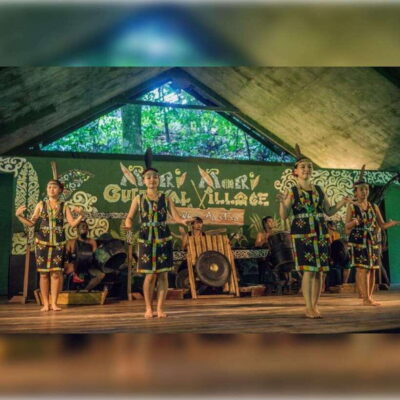
Mari-Mari Cultural Village Visit + Lunch + transfer
Read our review →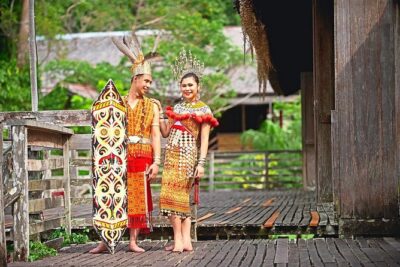
Browse the lists this tour appears in