
Reviewed · CULTURAL VILLAGES
Sarawak Cultural Village Tour
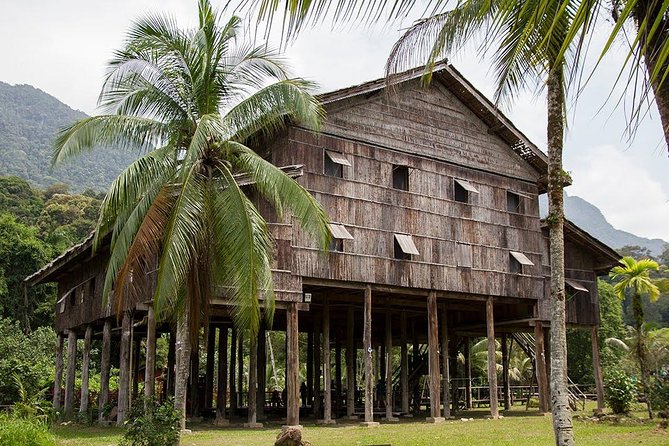
Culture comes alive in wooden longhouses. Sarawak Cultural Village gives you a useful half-day introduction to seven major ethnic groups, all arranged across a 17-acre site near Damai Beach. I like the easy hotel pickup and the chance to see traditional buildings, costumes, crafts, and performances in one visit. I also like the small maximum group size of 15, which should make it easier to hear your guide.
The main drawback is that the village is a recreated living museum, not an untouched village where daily life carries on exactly as it has for generations. Some visitors also find the displays hard to understand without a guide, so I consider the included transport and guide fees important to the experience rather than minor extras.
In This Review
- Key points at a glance
- What Sarawak Cultural Village helps you understand
- The 30-minute ride from Kuching to Damai
- Seven homes, seven cultural introductions
- Bidayuh traditions
- Iban longhouse life
- Orang Ulu and Penan displays
- Melanau, Malay, and Chinese homes
- Why a guide improves the visit
- The cultural performance is more than a short add-on
- Is $85 a fair price for four hours?
- Timing, effort, and who will enjoy it most
- Practical advice before you book
- Should you book the Sarawak Cultural Village Tour?
- FAQ
- Where is Sarawak Cultural Village located?
- How long does the tour last?
- What time does pickup take place?
- Is hotel pickup included?
- How many people can join the tour?
- Which cultural groups are represented?
- Is admission included?
- Are meals and gratuities included?
Key points at a glance
- Seven cultures in one walk: See representative homes linked to the Bidayuh, Iban, Orang Ulu, Penan, Melanau, Malay, and Chinese communities.
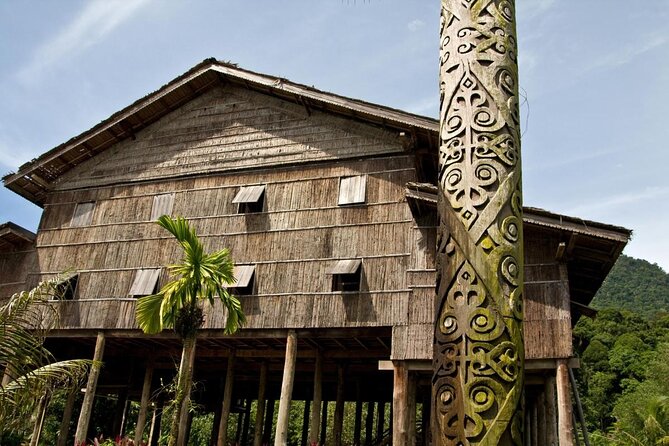
- Longhouses and traditional homes: The buildings show how different groups organized family life, work, and community space.
- A polished cultural performance: Music, dance, singing, and comedy bring energy to the visit and are a major highlight.
- Hotel pickup from Kuching: The drive to the village takes about 30 minutes, with departures at 9:00 AM and 2:00 PM.
- Small group limit: The tour accepts no more than 15 people, a useful advantage at demonstrations and performances.
- Guide quality matters: Guide Wesley was singled out for making the houses and tribal cultures easier to understand.
What Sarawak Cultural Village helps you understand
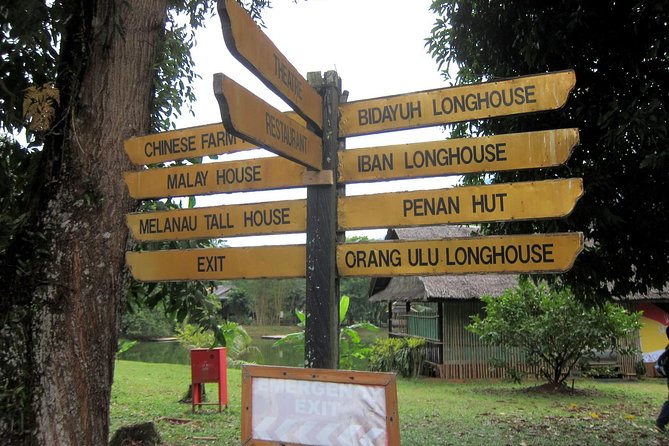
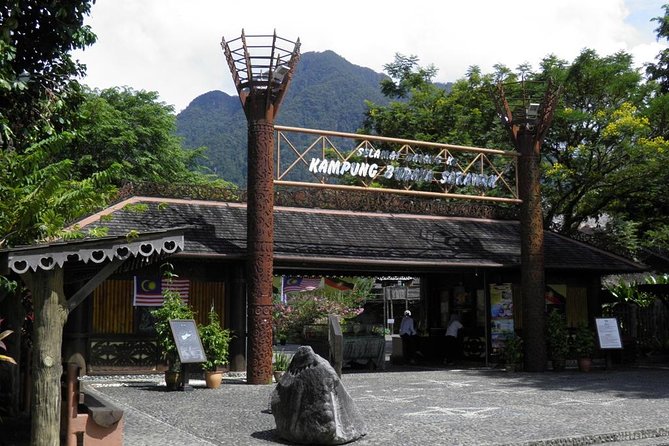
Sarawak is Malaysia’s largest state, and its communities have distinct homes, customs, clothing, and ways of organizing village life. Trying to understand all of that during a short stay in Kuching can be difficult. Sarawak Cultural Village offers a compact answer: seven representative homes on one 17-acre site.
I like this approach because it gives you a working framework before you see more of Sarawak. You may not leave with a complete understanding of every community, but you will have a clearer sense of the differences between the Bidayuh, Iban, Orang Ulu, Penan, Melanau, Malay, and Chinese traditions represented here.
The site is called a living museum because the houses are staffed by people in traditional clothing who explain their culture and carry out traditional activities. That personal element matters. A building can show you its shape, but a person can explain how the space was used and why certain objects mattered.
At the same time, keep your expectations sensible. The homes are replicas, and the whole site is designed for visitors. It is best understood as an educational introduction, not a substitute for visiting a working longhouse or meeting communities in their own villages.
More cultural village visits:
- Sarawak Cultural Village Tour from Kuching
★ 5.0 · 13 reviews - Sarawak Cultural Village Tour from Kuching
★ 5.0 · 12 reviews - Semenggoh Orangutan Center & Sarawak Cultural Village
★ 4.5 · 10 reviews
The 30-minute ride from Kuching to Damai
The tour begins with hotel pickup at 9:00 AM or 2:00 PM. You meet an English-speaking driver in your hotel lobby, then travel in an air-conditioned vehicle toward the village, which sits across from Damai Beach Resort and Hotels.
The drive takes about 30 minutes. That makes this a manageable choice if you want a cultural activity without committing to a full-day excursion. The transport also removes the need to arrange your own route to the village, which adds real value to the $85 price.
The pickup service is especially useful if you are staying in Kuching and prefer a straightforward plan. The afternoon departure can fit well after a slow morning, while the morning departure leaves more of the day available afterward.
The tour has a maximum of 15 people. That is not a private tour, but it is small enough to feel more personal than a large coach outing. A smaller group should help when you are listening to explanations inside the houses, although the actual experience may still depend on how the group moves through the site.
Seven homes, seven cultural introductions
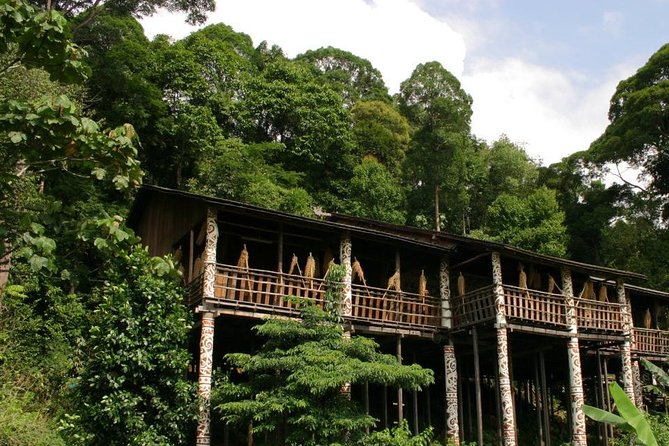
The village’s main attraction is its collection of representative houses. One leisurely walk takes you through seven homes connected with seven cultural groups. This arrangement gives the visit a clear rhythm and keeps the experience from becoming a long lecture in one indoor space.
Bidayuh traditions
The Bidayuh house introduces one of Sarawak’s major indigenous cultures. The structure and displays give you a place to begin comparing house design, objects, and daily life with what you see in the other buildings.
The value here is not simply looking at a wooden structure. Listen for the guide’s explanation of how people used the home and how the community was organized. Without that context, you might move through the building and notice only the decorative details.
A few more Malaysia trips worth weighing up
- Half-Day Heritage Bike Tour in Kuching
★ 5.0 · 162 reviews - Night Froggy Adventure at Kubah National Park
★ 5.0 · 71 reviews - Semenggoh Orangutan Centre from Kuching
★ 4.5 · 53 reviews - Bako National Park from Kuching City
★ 4.5 · 35 reviews
Iban longhouse life
The Iban longhouse is one of the most recognizable features of Sarawak Cultural Village. Longhouses are closely associated with Borneo, and this stop helps you understand why the design has such a strong place in the region’s cultural identity.
The longhouse is also a useful contrast to the other homes. You can compare its shared community character with more individually arranged spaces elsewhere in the village. The guide’s commentary is valuable here, since the building’s size and layout are easier to appreciate when someone explains how communal areas worked.
Orang Ulu and Penan displays
The Orang Ulu and Penan homes add two more perspectives to the visit. Their inclusion keeps the tour from presenting Sarawak as a single culture with minor variations.
You may find the displays more memorable if you pause for the stories attached to the objects and building features. The staff are there to interpret the way of life represented in each home, and they are happy to pose for photographs in traditional costume.
Photography is therefore part of the experience, but I would treat it as a bonus rather than the main reason to come. The strongest moments are likely to come from listening to the explanations and noticing how the homes differ.
Melanau, Malay, and Chinese homes
The Melanau, Malay, and Chinese buildings round out the village’s picture of Sarawak. Their presence is important because it shows the state’s cultural range beyond the better-known indigenous longhouses.
Taken together, the seven homes create a useful comparison. You see that Sarawak’s identity is shaped by several communities, not by one single tradition. The displays are especially helpful for first-time visitors who want an introduction before seeking out more specific cultural experiences elsewhere.
The key limitation remains the same: this is a recreated setting. You are seeing selected features presented for learning, not every part of ordinary life. A good guide can help you separate broad cultural context from the details designed for display.
Why a guide improves the visit
I would choose the guided option rather than trying to visit on my own. The houses do not always provide enough written information to explain everything you are seeing, and a guide can connect the buildings, objects, and customs into a story.
Guide Wesley received particular praise for making each house come alive. That is a useful clue about the difference a strong guide can make here. The tour is not only a walk through buildings. It is an interpretation of what those buildings represent.
The English-speaking driver also handles the transport during the tour. The package includes transportation, the entrance fee, boat fees, and guide fees. Since meals, gratuities, travel insurance, and anything not specifically listed are excluded, you should budget for those separately.
I would still keep an open mind about the guiding. The experience may vary with the person assigned to your group. The small group limit helps, but it cannot guarantee the same guide or the same style of explanation each time.
The cultural performance is more than a short add-on
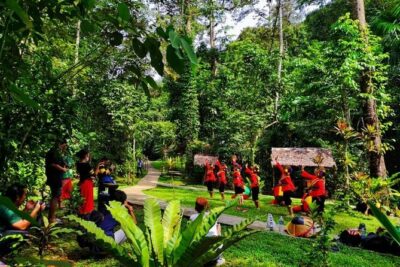
The cultural show is one of the strongest reasons to include this tour in a Kuching itinerary. It features musicians, dancers, singers, and comic performers, giving the visit a lively finish after the quieter house displays.
The performance is polished and professional. That makes it easy to enjoy as entertainment, but it also gives you another way to see cultural traditions presented through movement, music, and costume.
I like the balance between the open-air village setting and the formal show. The houses let you wander and ask questions, while the performance gathers the group for a shared presentation. It helps prevent the visit from feeling like a row of static exhibits.
The show is also suitable for families. Children may not follow every explanation inside the houses, but music, dancing, and comedy give them something immediate to enjoy. Adults can pay closer attention to how the performance fits with the cultural themes introduced during the walk.
One point of balance: a stage performance is necessarily arranged for an audience. It is not the same as seeing a spontaneous community celebration. Still, it is a well-executed introduction and one of the most consistently praised parts of the experience.
Is $85 a fair price for four hours?
At $85 per person, this is not the cheapest way to spend half a day in Kuching. The price makes more sense when you count what is included: hotel pickup, an air-conditioned vehicle, admission, guide fees, boat fees, and transportation during the tour.
The tour also saves you the trouble of working out transport to Damai and coordinating the return. For a first visit, that convenience can be worth paying for. You are buying a prepared introduction rather than only an entry ticket.
The value depends on how much interpretation you want. If you enjoy reading signs at your own pace and arranging your own transport, an independent visit might appeal more. But if you want the cultural background explained as you go, the tour is stronger value.
Group discounts may be available, which could improve the price for larger parties. A 30 percent surcharge applies during Chinese New Year, Hari Raya Aidilfitri, Hari Gawai Dayak, Christmas Day, and the Rainforest World Music Festival. Check the total before booking if your dates fall during one of those periods.
No meal is included. For a four-hour tour, that is not a serious problem, but plan food around the 9:00 AM or 2:00 PM departure. Gratuities are recommended, and travel insurance is not included.
Timing, effort, and who will enjoy it most
The tour lasts about four hours, including transport and the village visit. You should expect a moderate amount of walking across a large outdoor site, so a moderate level of physical fitness is required.
I would recommend it to first-time visitors to Kuching, families, couples, and anyone with limited time who wants a broad introduction to Sarawak. It also suits people who prefer organized transport and explanation over independent sightseeing.
The tour may be less satisfying if you want a long, detailed study of one particular ethnic group. Seven cultures in four hours means the coverage is broad rather than highly specialized.
Children must be accompanied by an adult. The family-friendly performance helps, but younger children may have limited patience for the explanatory parts of the visit. A morning or afternoon schedule gives you some choice about which timing works best for your family.
The tour is capped at 15 people, but it is still a group experience. If you need complete flexibility at every stop, a private arrangement would be better, though that is not what this experience offers.
Practical advice before you book
I would book this tour when your Kuching schedule includes only a short window for cultural sightseeing. It efficiently gathers seven cultural settings, a performance, transport, and a guide into one half-day.
Pay attention to the departure time. The morning option begins at 9:00 AM, while the afternoon option begins at 2:00 PM. The drive takes about 30 minutes, so allow room in your day for the full four-hour activity rather than treating it as a quick stop.
Wear something comfortable for walking and be ready to spend time outdoors. The site covers 17 acres, and the visit works best when you can move at an easy pace between the homes and listen to the staff.
Take photographs respectfully. Staff members are happy to pose, which makes for a pleasant personal memory, but the cultural explanations deserve your attention too. I would use the photo opportunities as pauses rather than rushing from one building to the next.
The non-refundable booking terms deserve attention before you pay. This experience cannot be changed or refunded if you cancel, so confirm your date, pickup details, and party size first.
Should you book the Sarawak Cultural Village Tour?
I would book it if you want a clear, convenient first look at Sarawak’s many cultures. The combination of seven representative homes, traditional activities, an energetic cultural performance, English-language guidance, and hotel pickup gives you a lot to work with in four hours.
I would skip it only if you strongly prefer independent visits or want an un-staged village experience. For most first-time visitors based in Kuching, especially families and people with limited time, the tour offers a practical introduction and better context than wandering through the houses alone.
FAQ
Where is Sarawak Cultural Village located?
Sarawak Cultural Village is in Kuching, across from Damai Beach Resort and Hotels.
How long does the tour last?
The tour lasts approximately four hours.
What time does pickup take place?
Pickup is offered at 9:00 AM or 2:00 PM.
Is hotel pickup included?
Yes. The tour includes pickup and transportation in an air-conditioned vehicle.
How many people can join the tour?
The maximum group size is 15 people.
Which cultural groups are represented?
The village represents the Bidayuh, Iban, Orang Ulu, Penan, Melanau, Malay, and Chinese communities.
Is admission included?
Yes. The entrance fee is included, along with boat and guide fees.
Are meals and gratuities included?
No. Meals and gratuities are not included. Travel insurance and anything not specifically listed are also excluded.
Just added around Kuching
- Nomadic Nightfall: Kuching Pub Crawl Adventure★ 5.0 · 3 reviews
- Kuching: Walking Tour with Sampan Boat Ride and Lunch★ 5.0 · 3 reviews
- Marvellous Creature Orangutan : Sarawak Semenggoh Wildlife Centre Tour★ 4.0 · 3 reviews
- Kuching Half Day City Tour★ 5.0 · 4 reviews
- Kuching Fairy & Wind Caves Tour★ 5.0 · 4 reviews
- Sarawak Sunset River Cruise with Return Transfer★ 4.0 · 5 reviews
- Kuching City Tour★ 4.0 · 6 reviews
- Mountain Biking Gold Mine Full-Day Tour★ 4.5 · 6 reviews
Cultural Villages, compared.

Private Tour Kampung Gipsi Sabah Cultural Village Kota Kinabalu
Read our review →
Mari-Mari Cultural Village Visit + Lunch + transfer
Read our review →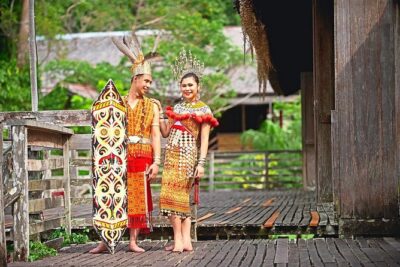
Browse the lists this tour appears in